CONVECTIVE CLOUD OVER THE SEA
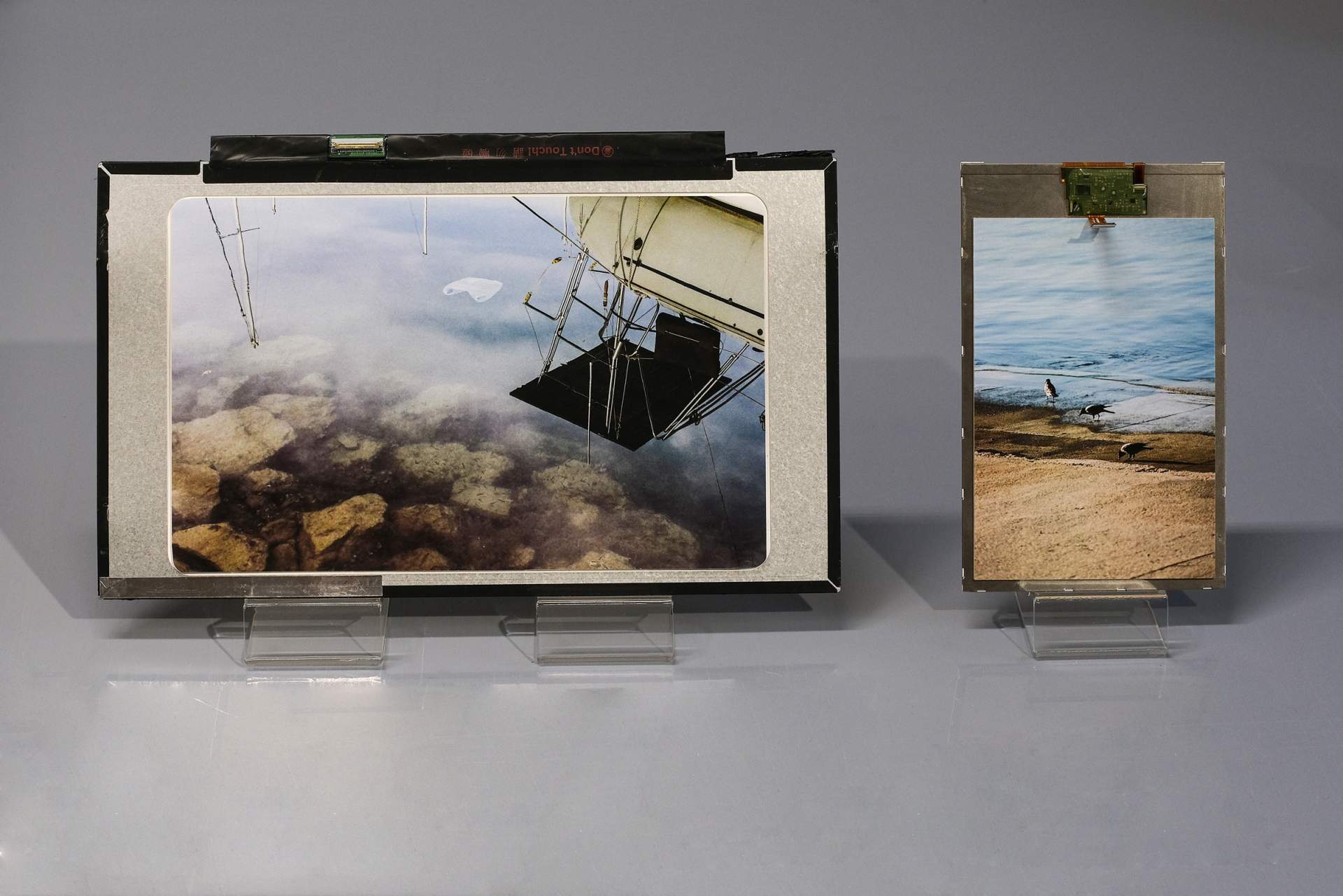
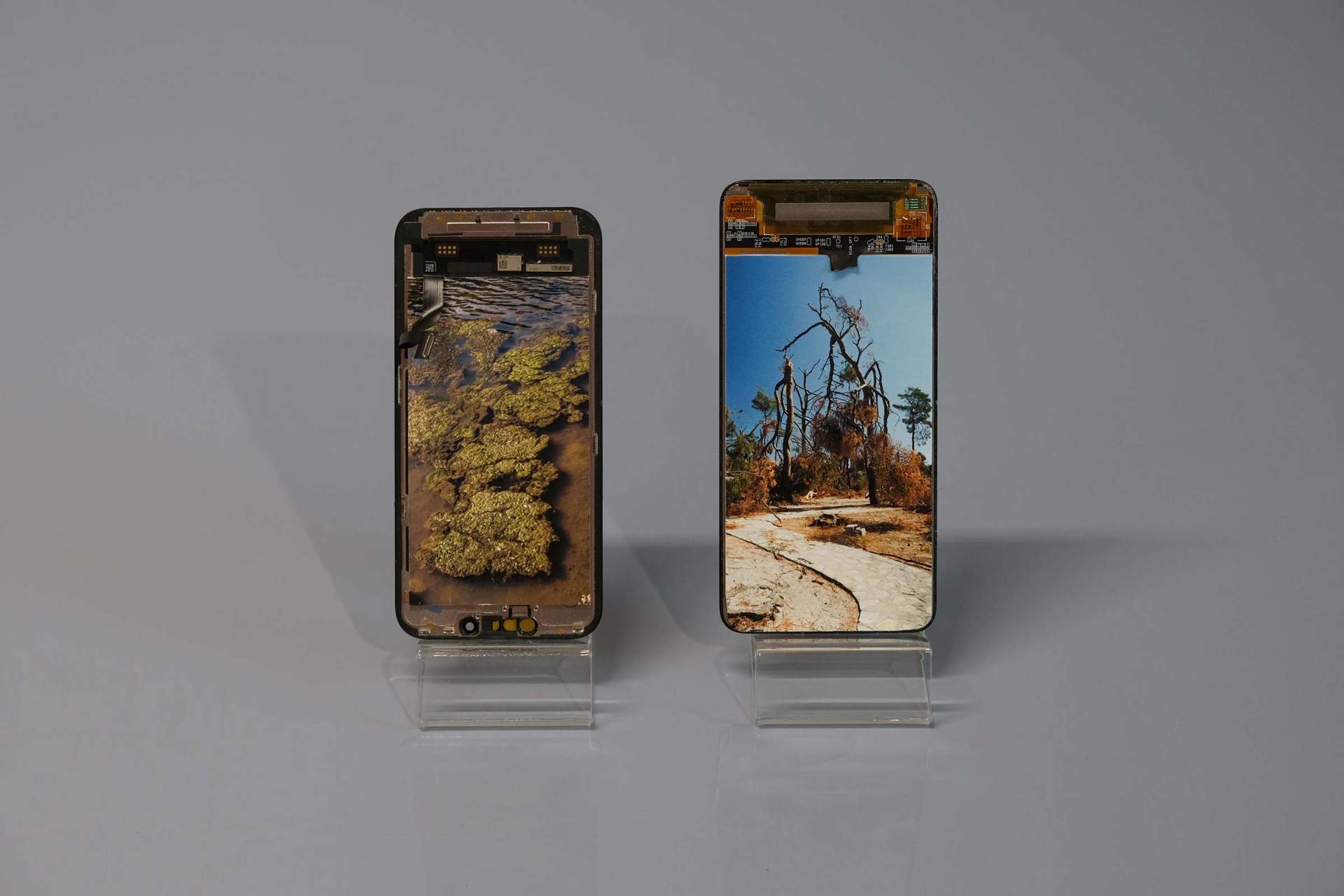
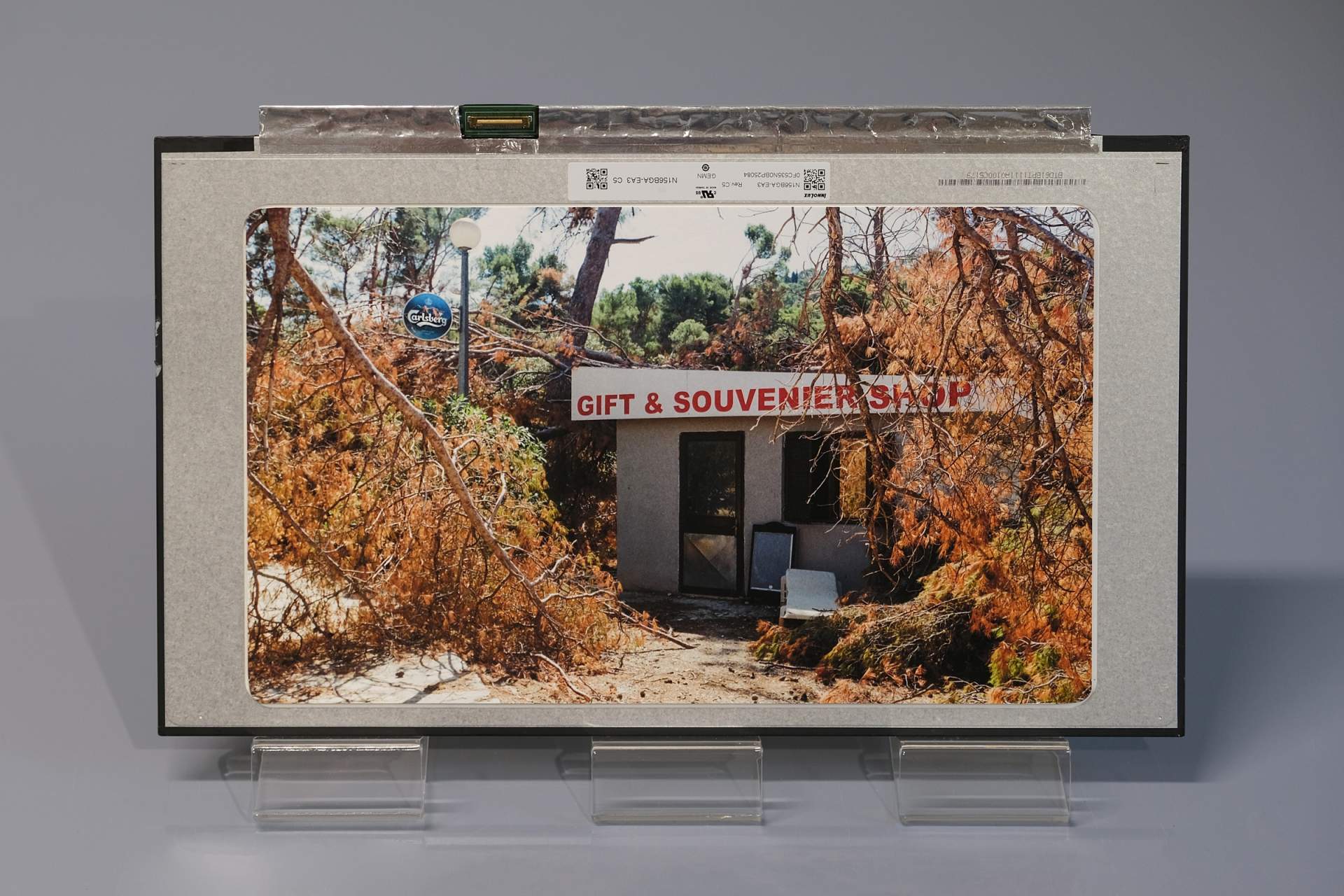
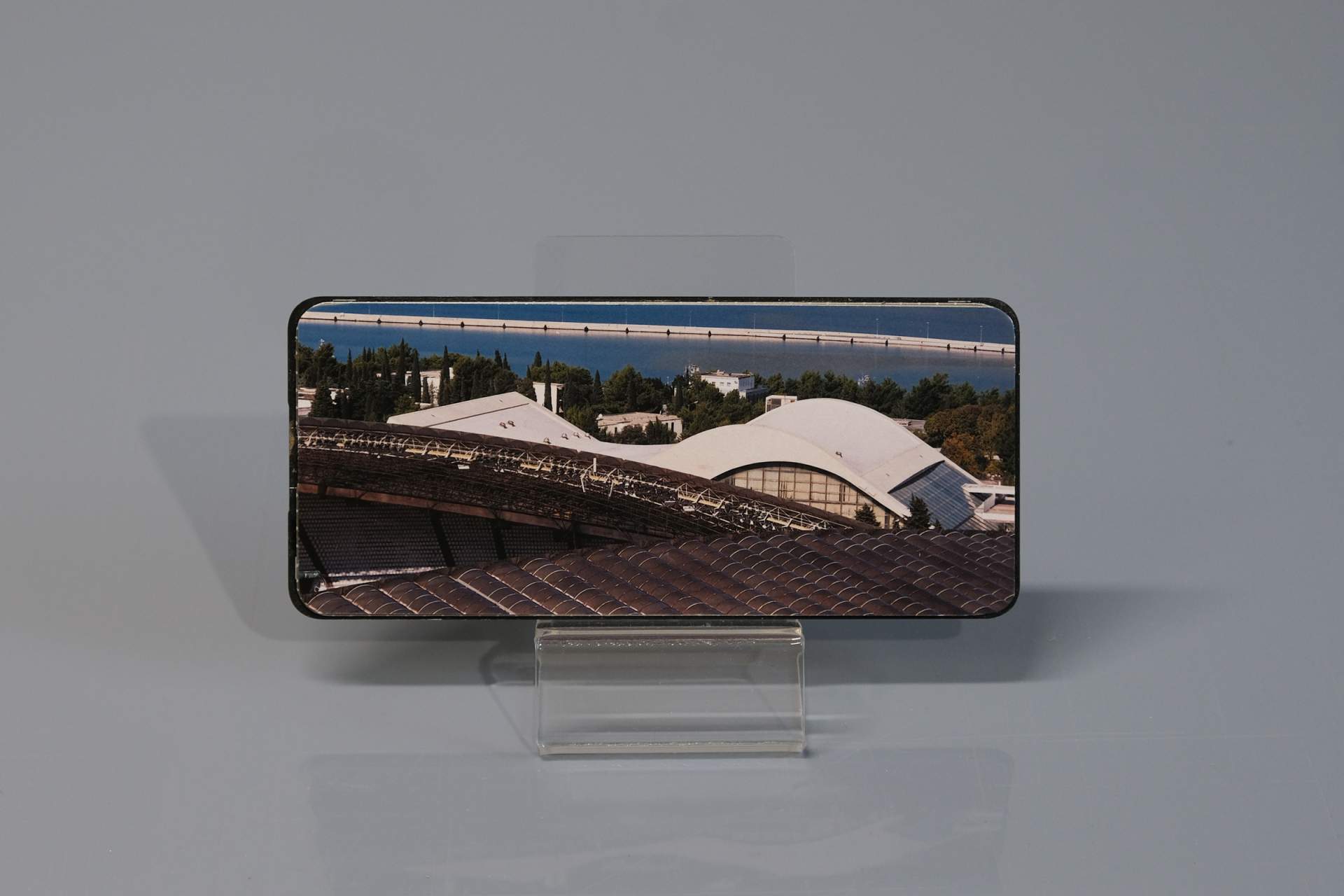
analogue photographs, digital print, mounted on cardboard, applied to discarded smart device screens
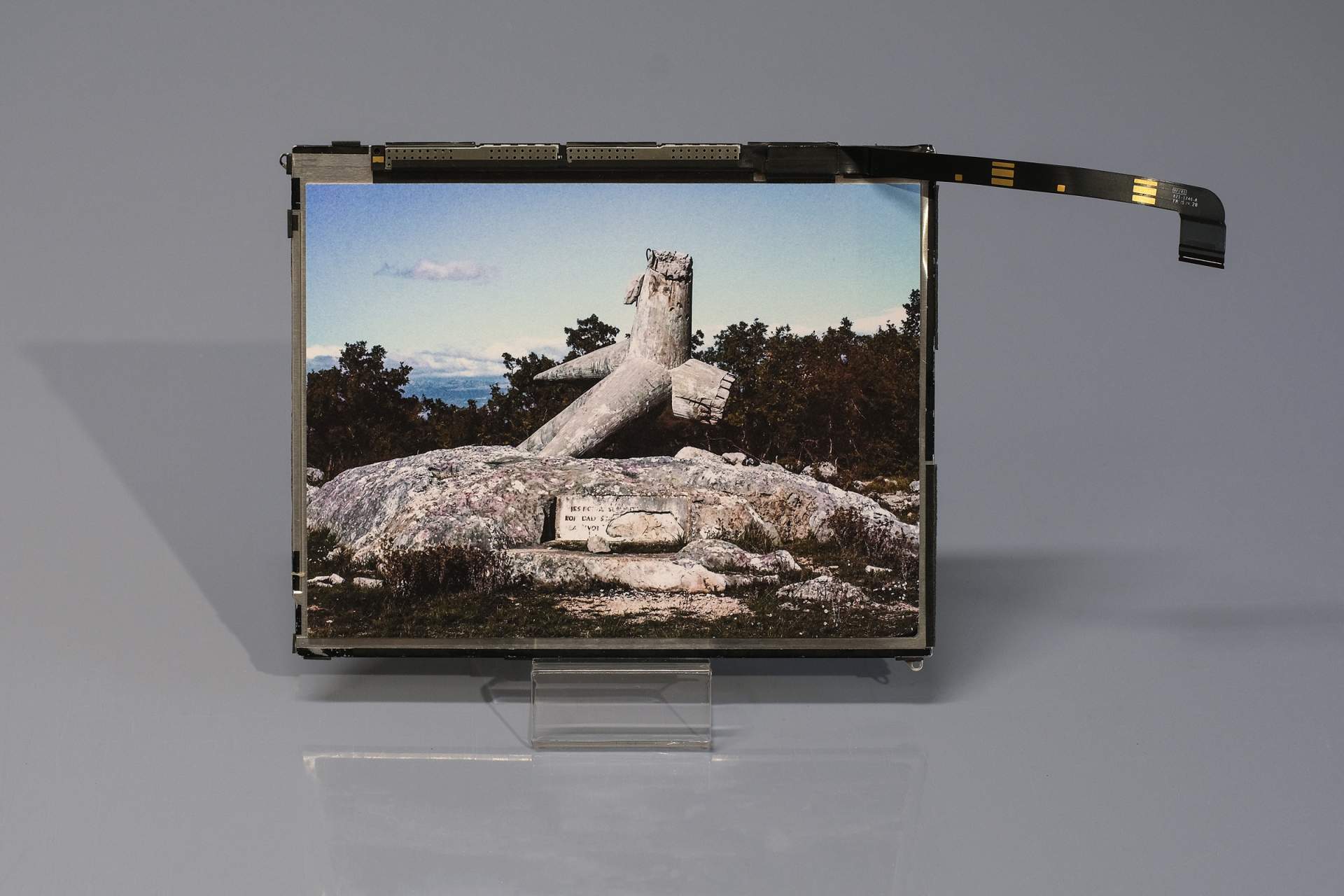
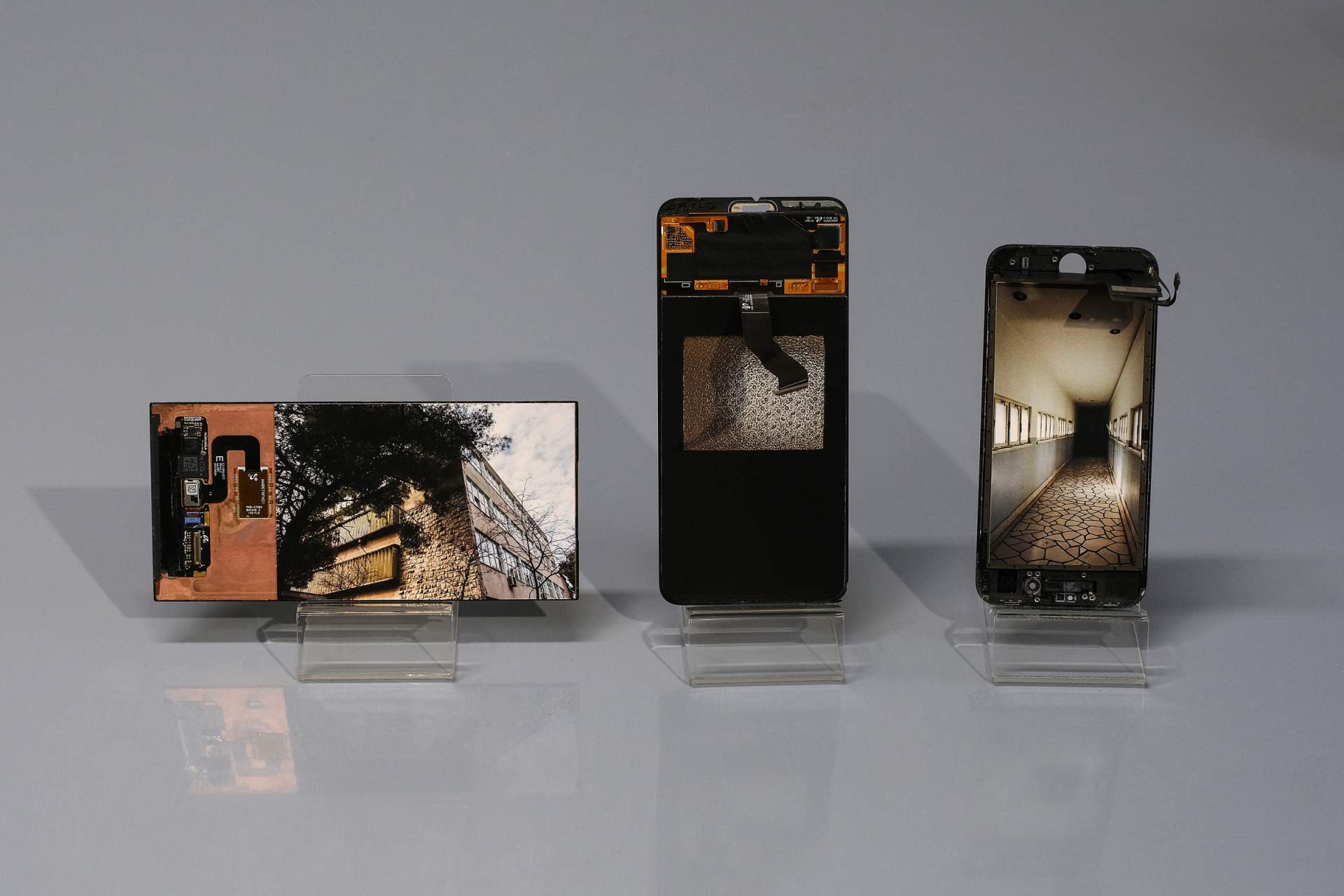
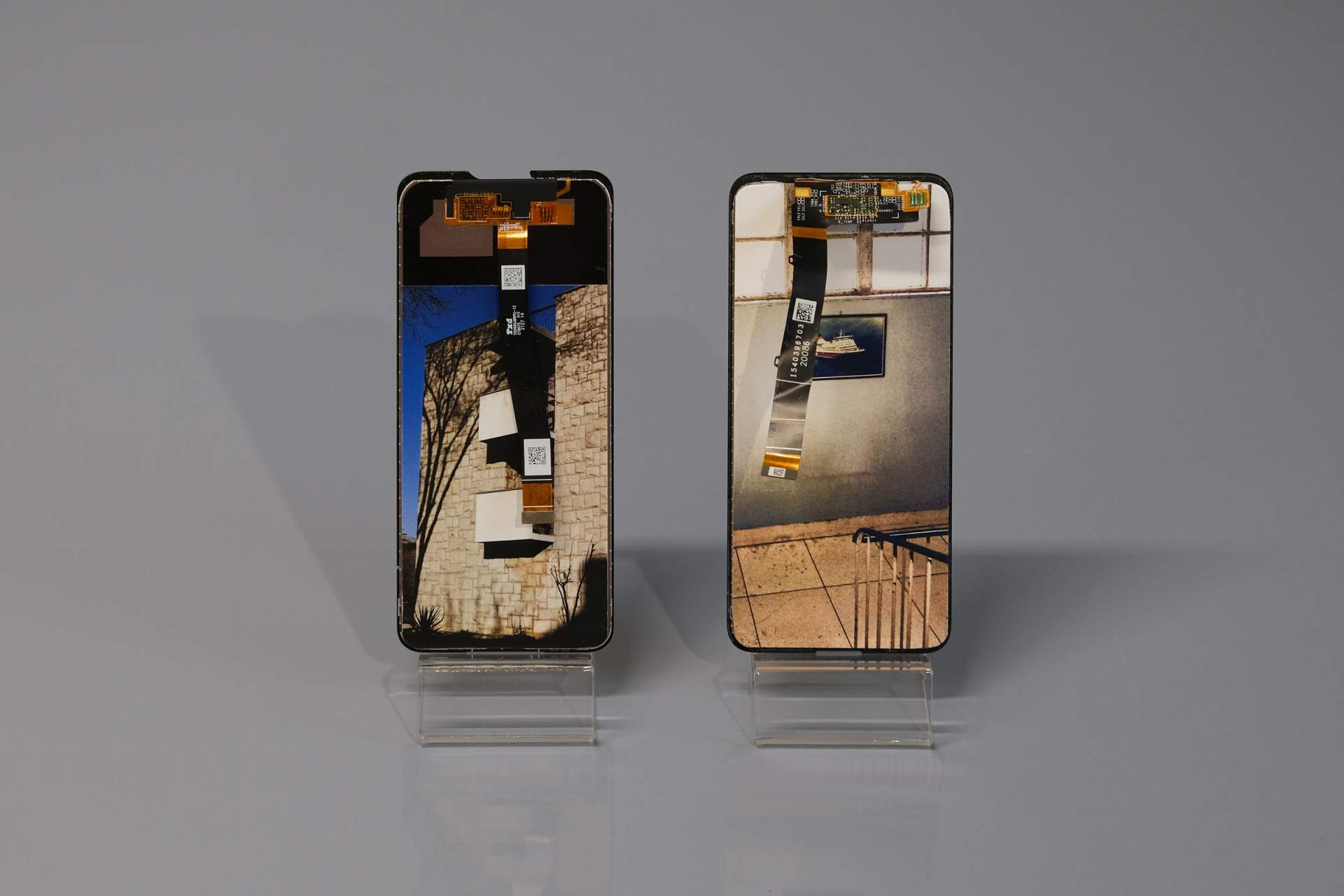
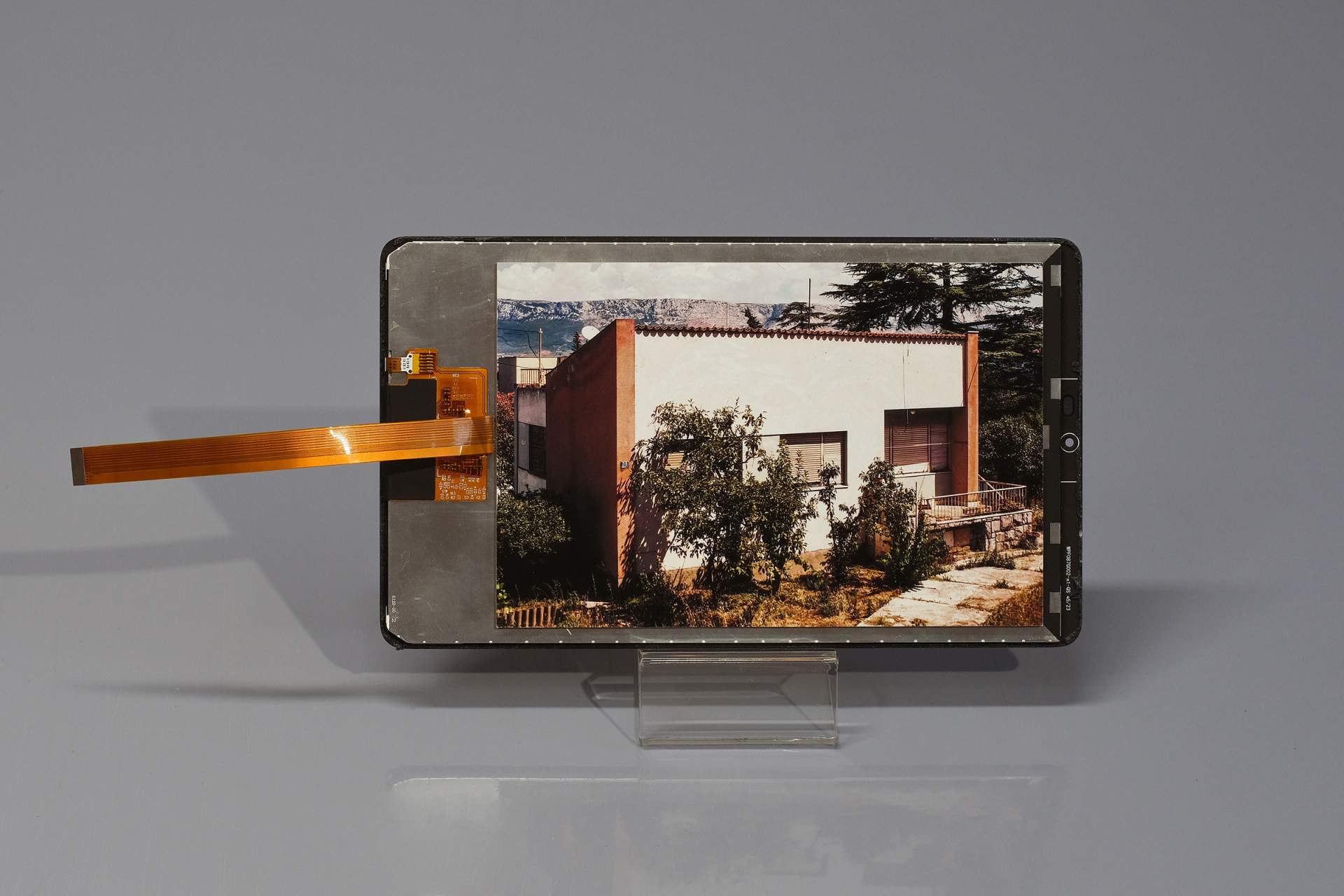
SCENES:
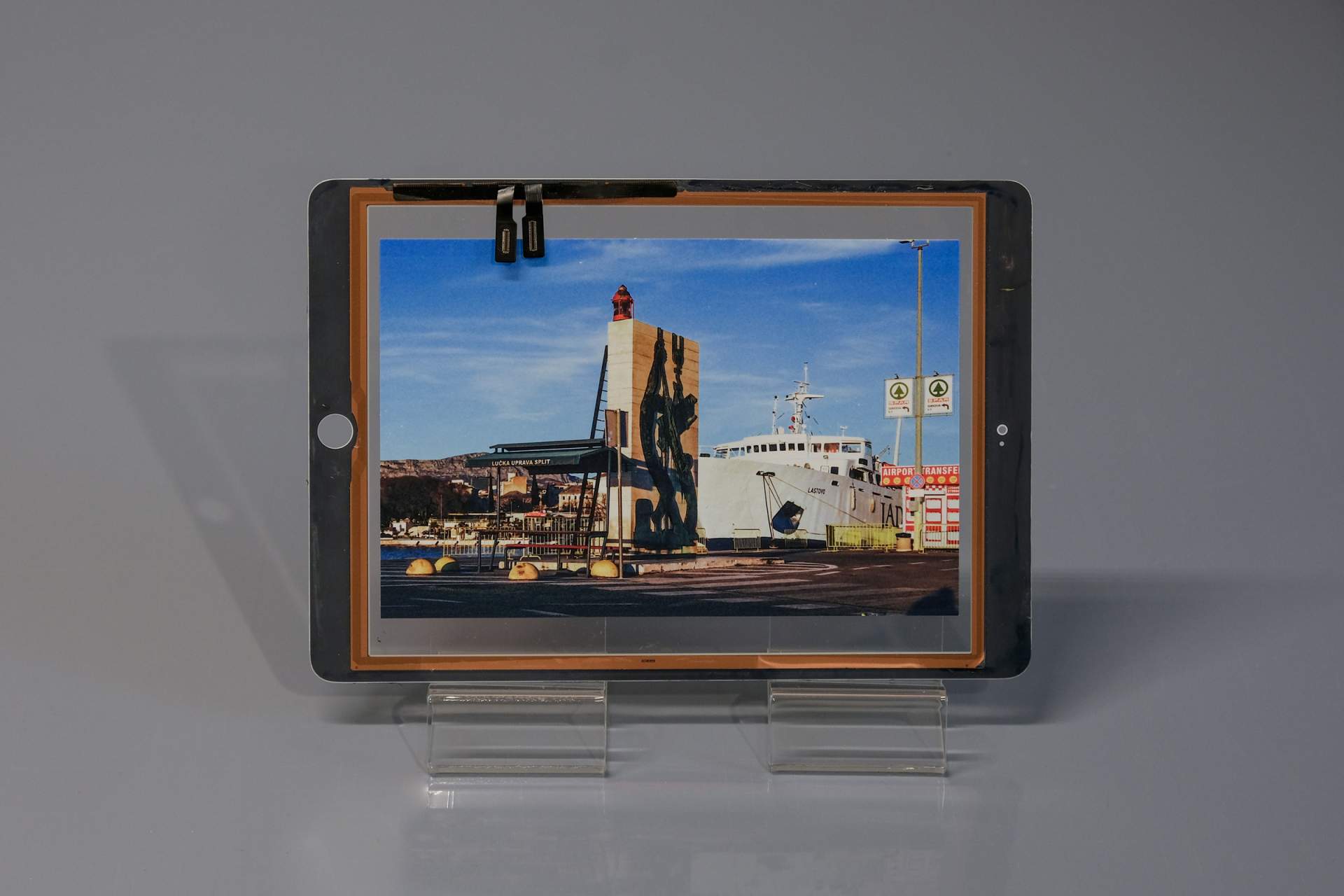
- Monument to the First Partisan Brigade, Košute, 1961–1990
- Design Office of Brodosplit, Split, 1963
- Excursion House in Spinut, Split, 1962
- Former house in the settlement for Brodosplit managers and workers, Mandalinski put 38, Split, 1963–2013
- Small harbour of the Špinut Maritime-Sports Society, formed by landfill after the breakthrough of the Marjan Tunnel
- Plateau in front of the Gusar Rowing Club in Split
- Algae in Luka Bay near Korčula
- Bene beach on Marjan after the storm of 8 July 2025, Split
- Poljud
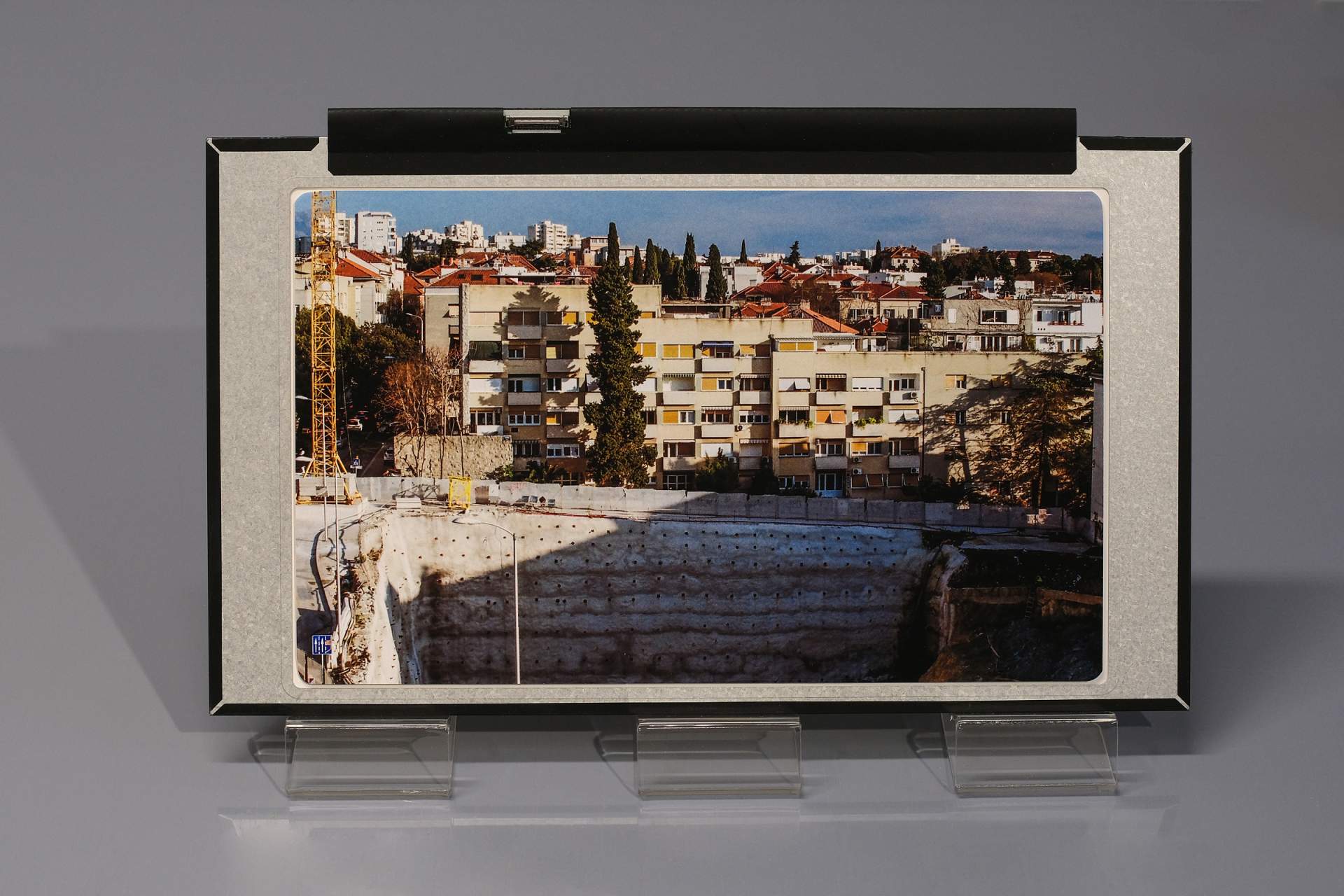
- Construction site of the Small Mall in front of the residential building on Riječka ulica in Split
- Monument to Port Workers Killed in the People’s Liberation War, in collaboration with sculptor Željko Radmilović,
- Port of Split, 1963
The work was created as part of a broader artistic research into Vuko Bombardelli, a neglected modernist architect and urban planner. The title refers to the meteorological phenomenon the media used to explain the destructive storm that struck northern Split last summer. Avoiding direct references to climate change has, in turn, opened space for public calls to demolish Poljud Stadium, while restoration of the damaged areas of Marjan Forest Park remains pending.
The series of photographic objects can be read as a statement on the decline of socialism’s social and natural heritage under the pressure of the touristification of coastal cities. The analogue photographs depict sites of Bombardelli’s work, today marked by traces of the destruction of culture, space and nature, and consequently of values grounded in the rights of humans and other living species.
At the same time, the work questions the status of photography: after becoming a cheap, rapidly consumed commodity in the digital age—a miniature of dissolved objecthood—the development of artificial intelligence has also called into question its fundamental feature: referentiality. The discarded screens onto which the photographs are mounted also point to the material cost of the digital image: resource consumption, electronic waste, and the growing loss of a direct relationship with place and community.
One of the screens contains an almost imperceptible fifteenth element—a small mirror in which our own reflection also appears.
Supported by: Ministry of Culture and Media of the Republic of Croatia